
Testagen (20mg)
Table of Contents
Quickstart Highlights
Testagen is a synthetic tetrapeptide with the sequence Lys‑Glu‑Asp‑Gly (KEDG), an anterior pituitary‑derived bioregulator studied for its role in modulating endocrine function, particularly the pituitary–gonadal axis[1][2]. Preclinical research indicates effects on thyroid hormone normalization and male reproductive hormone modulation[3][4]. This educational protocol presents a once‑daily subcutaneous approach using a practical dilution for clear insulin‑syringe measurements.
- Reconstitute: Add 3.0 mL bacteriostatic water → ~6.67 mg/mL concentration.
- Target dose: 100–300 mcg once daily (gradual titration).
- Easy measuring: At 6.67 mg/mL, 1 unit = 0.01 mL ≈ 66.7 mcg on a U‑100 insulin syringe.
- Storage: Lyophilized: freeze at −20 °C (−4 °F); after reconstitution, refrigerate at 2–8 °C (35.6–46.4 °F); avoid freeze–thaw cycles.
Dosing & Reconstitution Guide
Standard / Gradual Approach (3 mL = ~6.67 mg/mL)
| Phase | Daily Dose (mcg) | Units (per injection) (mL) |
|---|---|---|
| Weeks 1–2 | 100 mcg | 1.5 units (0.015 mL) |
| Weeks 3–4 | 150 mcg | 2.25 units (0.0225 mL) |
| Weeks 5–8 | 200 mcg | 3 units (0.03 mL) |
| Weeks 9–12 (optional) | 250–300 mcg | 3.75–4.5 units (0.0375–0.045 mL) |
Frequency: Inject once daily subcutaneously, consistent with preclinical study protocols[3][4]. For ≤10‑unit (≤0.10 mL) administrations, consider 30‑ or 50‑unit insulin syringes for improved readability.
Reconstitution Steps
- Draw 3.0 mL bacteriostatic water with a sterile syringe.
- Inject slowly down the vial wall; avoid foaming.
- Gently swirl/roll until dissolved (do not shake)[5].
- Label and refrigerate at 2–8 °C (35.6–46.4 °F), protected from light.
Protocol Overview
Concise summary of the once‑daily regimen.
- Goal: Support endocrine function research, particularly pituitary–gonadal axis modulation[1][2].
- Schedule : Daily subcutaneous injections for 8–12 weeks (extend to 16 weeks if desired).
- Dose Range : 100–300 mcg daily with gradual titration.
- Reconstitution :3.0 mL per 20 mg vial (~6.67 mg/mL) for accurate unit measurements.
- Storage : Lyophilized frozen; reconstituted refrigerated; avoid repeated freeze–thaw.
Dosing Protocol
- Start : 100 mcg daily; increase by ~50 mcg every 2 weeks as tolerated.
- Target: 200–300 mcg daily by Weeks 5–12.
- Frequency: Once per day (subcutaneous).
- Cycle Length: 8–12 weeks; optional extension to 16 weeks.
- Timing: Any consistent time; rotate injection sites.
Storage Instructions
- Lyophilized: Store at −20 °C (−4 °F) in dry, dark conditions; minimize moisture exposure.
- Reconstituted: Refrigerate at 2–8 °C (35.6–46.4 °F); prepare aliquots if needed and avoid freeze–thaw.
- Allow vials to reach room temperature before opening to reduce condensation uptake.
Suppilies Needed
Plan based on an 8–16 week daily protocol with gradual titration.
- Peptide Vials (Testagen, 20 mg each):
-
- 8 weeks (~14 mg used) ≈ 1 vial
- 12 weeks (~25 mg used) ≈ 2 vials
- 16 weeks (~36 mg used) ≈ 2 vials
- Insulin Syringes (30‑ or 50‑unit recommended for low‑volume accuracy):
-
- Per week: 7 syringes (1/day)
- 8 weeks: 56 syringes
- 12 weeks: 84 syringes
- 16 weeks: 112 syringes
- Bacteriostatic Water (10 mL bottles): Use ~3.0 mL per vial for reconstitution.
-
- 8 weeks (1 vial): 3 mL → 1 × 10 mL bottle
- 12 weeks (2 vials): 6 mL → 1 × 10 mL bottle
- 16 weeks (2 vials): 6 mL → 1 × 10 mL bottle
- Alcohol Swabs: One for the vial stopper + one for the injection site each day.
-
- Per week: 14 swabs (2/day)
- 8 weeks: 112 swabs → recommend 2 × 100-count boxes
- 12 weeks: 168 swabs → recommend 2 × 100-count boxes
- 16 weeks: 224 swabs → recommend 3 × 100-count boxes
Important Notes
Practical considerations for consistency and safety in research protocols.
- Use new sterile insulin syringes; dispose in a sharps container[7].
- Rotate injection sites (abdomen, thighs, upper arms) to reduce local irritation[8].
- Inject slowly; wait a few seconds before withdrawing the needle.
- Document daily dose and site rotation to maintain consistency.
- Due to very low injection volumes (≤5 units), a 30‑ or 50‑unit syringe is recommended for precision.
How This Works
Testagen (Lys‑Glu‑Asp‑Gly) belongs to a class of short bioregulatory peptides derived from anterior pituitary extracts[1]. Preclinical research in avian models demonstrates that this tetrapeptide can normalize thyroid hormone levels in hypophysectomized subjects and modulate endocrine signaling along the pituitary–gonadal axis[3][4]. These peptides are hypothesized to act through gene‑regulatory mechanisms influencing hormone synthesis and secretion[2]. No human clinical trials exist; current understanding is extrapolated from preclinical and in vitro studies.
Potential Benefits & Side Effects
Observations from preclinical literature (no human trials available).
- Preclinical studies suggest normalization of thyroid hormone parameters in hypophysectomized models[3][4].
- Research indicates potential modulation of male reproductive hormones via pituitary pathways[2].
- No published human safety or efficacy data; side‑effect profile in humans remains unknown.
- Occasional mild injection‑site reactions (redness/itch) may occur with subcutaneous administration.
Lifestyle Factors
Complementary strategies for best outcomes.
- Maintain a balanced, nutrient‑dense diet supporting endocrine health.
- Engage in regular physical activity to support hormonal balance.
- Prioritize quality sleep (7–9 hours) to optimize endogenous hormone rhythms.
- Manage stress through mindfulness or other techniques to reduce cortisol interference.
Injection Technique
General subcutaneous guidance from clinical best‑practice resources[9].
- Clean the vial stopper and skin with alcohol; allow to dry[7].
- Pinch a skinfold; insert the needle at 45–90° into subcutaneous tissue[7][8].
- Do not aspirate for subcutaneous injections; inject slowly and steadily[7].
- Rotate sites systematically (abdomen avoiding 2″ around navel, thighs, upper arms) to avoid tissue damage[8].
- Use a fine gauge needle (23–25 G, ½–⅝″) for comfort[7].
Recommended Source
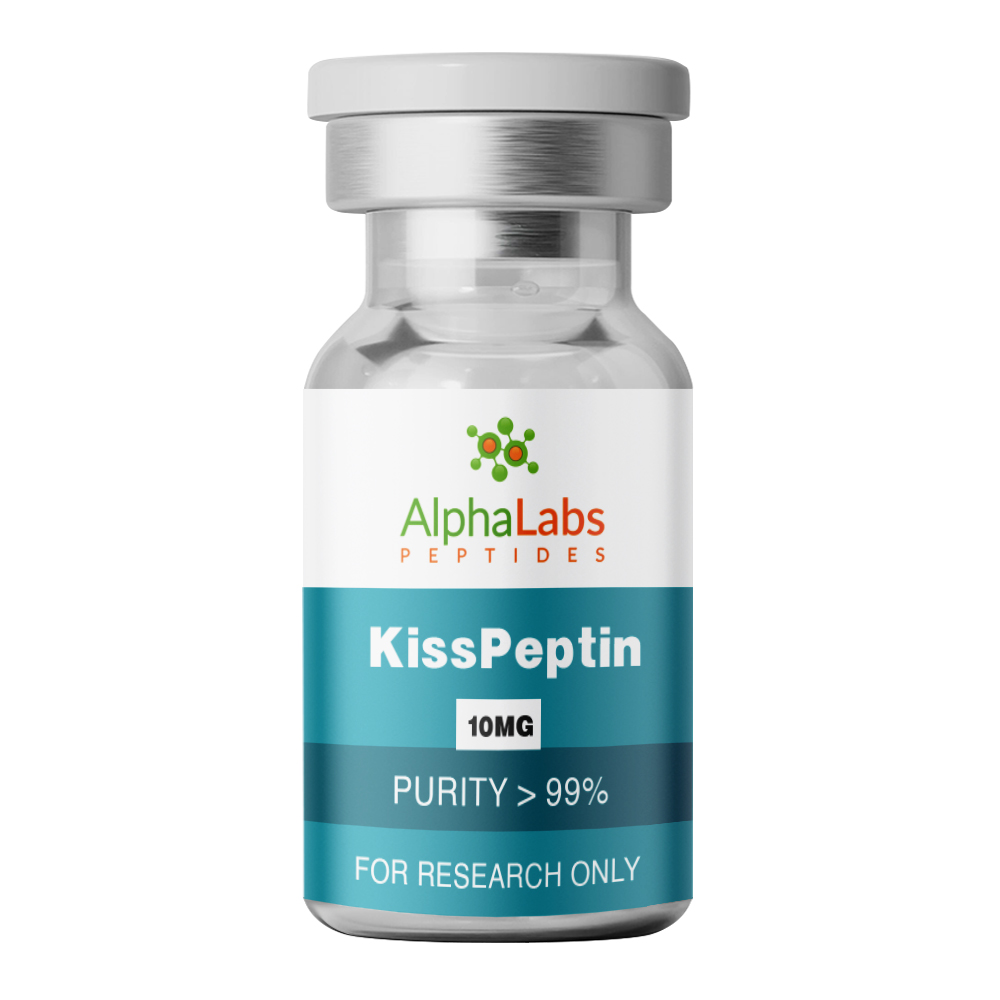
We recommend Go Alpha Labsfor high‑purity Kisspeptin (10 mg).
Why Go Alpha Labs?
- Verifies ≥99% purity through independent lab testing
- Trusted by researchers seeking reliable results
- Follows rigorous manufacturing standards for consistent quality
References:
| Source | Link |
|---|---|
| MDPI Molecules — The Inhibitory Effect and Adsorption Properties of Testagen Peptide on Copper Surfaces (structural characterization) | View Source |
| MDPI Molecules — Peptide Regulation of Gene Expression: A Systematic Review (bioregulatory peptide mechanisms) | View Source |
| PubMed — Effects of hypophyseal Lys-Glu-Asp-Gly peptide on immunity, hemostasis, and thyroid function in hypophysectomized chickens | View Source |
| PubMed — Effects of Lys-Glu-Asp-Gly peptide on hormonal activity and thyroid morphology in hypophysectomized mature and old birds | View Source |
| GenScript — Peptide Storage and Handling Guidelines (reconstitution and stability best practices) | View Source |
| JPT Peptide Technologies — How Long Do Peptides Last? (stability and storage considerations) | View Source |
| CDC — Vaccine Administration: Subcutaneous Injection Technique (angle, site, no aspiration) | View Source |
| MedlinePlus — Subcutaneous (SQ) Injections: Patient Instructions (site rotation and technique) | View Source |
| PMC — Subcutaneous Drug Delivery: Pharmacologic Considerations and Clinical Practice | View Source |
| PMC — Subcutaneous Injection Route: Pharmacokinetics and Clinical Applications Review | View Source |
| NCBI Bookshelf — Best Practices for Injection (asepsis, preparation, and administration) | View Source |